Think, for a moment, about the last time you told yourself you were going to get serious about making changes in your life. Perhaps it was something you’ve been meaning to do, a new skill you dreamed of learning for a long time, or a pesky problem that you had to solve. How did you feel at the time? Now, did you follow through with the changes that you wanted?
If you struggled with following through, then you are not alone.
“The secret of getting ahead is getting started. The secret to getting started is breaking your complex, overwhelming tasks into small, manageable tasks and then starting on the first one,” wrote Mark Twain.
Our desire to make changes in our lives can be a good thing. However, we sometimes miss a few important pieces of the puzzle. And these missing parts can cause us frustration when we fall off track.
Here are three ways to use your calendar as a tool to get started with studying for your PPL written test.
Be specific
One of the challenges with goals is that we are sometimes vague. For example, at the beginning of the year, millions of people across the world create New Year’s resolutions like “I want to exercise more!” You can see proof of this if you have ever set foot in a gym in January.
What does “I want to exercise more” really mean? We can unknowingly fall into this trap when studying for the PPL written.
Details are the antidote to vagueness. Details lift the fog around your goals to bring clarity by helping you get specific.
What if you already know you need to study, but you’ve struggled with getting started?
In this case, starting small can help you remove some of your mental barriers so you can move forward. Studying for one hour is an example of starting small. The power of one hour is in its simplicity. You are already doing other activities for an hour each day. And studying doesn’t require a bunch of apps or the latest iPad — choose a quiet place in your home, turn on your laptop, open your Google Doc for taking notes, log in to your online ground school, and begin.
Now we are getting more specific with our goal. “I want to study for my written more” becomes “I will study for my PPL written test for 1 hour a day.” We can improve it further by adding details to describe it in vivid detail. Ask questions like these:
– Where?
– When?
– How often?
– What time frame?
The vague idea of “I want to study more” is then transformed into a good enough goal to start with:
“My goal is to study for my PPL written at my desk in the morning for one hour five times a week within one month from today.”
Let’s look at a couple more examples together:
– What if 1 hour is too much? Try scaling back to 30 minutes. → “My goal is to study for my PPL written at my desk in the morning for 30 minutes five times a week within one month from today.”
– What if my schedule changes frequently? Look for parts of your day that are predictable. → “My goal is to study for my PPL written during my lunch for 30 minutes five times a week within one month from today. I’ll also schedule two additional one-hour study sessions during the week.”
As the authors, Dan Heath and Chip Heath, write in their book Switch, “In one study, they tracked college students who had the option to earn extra credit in a class by writing a paper about how they spent Christmas Eve. But there was a catch: To earn the credit, they had to submit the paper by December 26. Most students had good intentions of writing the paper, but only 33 percent of them got around to writing and submitting it. Other students in the study were required to set action triggers — to note, in advance, exactly when and where they intended to write the report (for example, “I’ll write this report in my dad’s office on Christmas morning before everyone gets up”). A whopping 75% percent of those students wrote the report.”
What this study is suggesting, in other words, is that writing down when and where you’ll study for your PPL written can dramatically improve the chances of you following through.
Try this approach with your study goal right now.
1. Grab a sheet of paper or a post-it note and a pen.
2. On the left, write your original goal. Then on the right, write your new goal that is filled with details.
3. Now read it back to yourself. Notice how you feel when you say it out loud.
Next, we’re going to talk about setting yourself up for success.
Be realistic
When we begin some type of change, there’s going to be a period where you struggle. It usually happens near the beginning. It’s the period where you run into a lot of challenges and where people tend to quit. I imagine you know someone who has experienced this:
– Decided to become a morning person and get up every day at 5 am…only to sleep through their wake-up alarm from not getting enough sleep.
– Decided to join a gym and work out every day…only to fall off track after a couple of days because they were too sore to do anything else.
For this reason, we want to be realistic about how much studying we can do during the week.
An ambitious doctor, lawyer, engineer, software developer, or another professional may already have a demanding career. This is where starting with studying for 1 hour a day shines. Here’s feedback from someone who decided to follow through with studying:
“As a busy professional pursuing my private pilot license, time management is crucial…saved me countless hours. The 8 practice tests helped me identify my weak areas quickly, and the detailed explanations helped me understand concepts I was struggling with. Passed my written exam with a 92%.”
What you are really doing is changing your identity to show yourself “I can really do this.” Each one-hour study session is a small win. As you rack up wins, the momentum compels you almost like a magnet to move forward with your aviation journey.
By planning for failure, we can anticipate where we may drift off course and understand how to get back on track.
Be flexible
Do you remember that fable about the oak and the reeds? The oak is mighty, while the reeds bend with the winds. During a hurricane, the oak gets knocked over. The reeds, with their resilience, are okay.
You want to be able to bounce back like the reeds. To do that, think about three to five areas where you may fall off track with your goal.
For example, let’s say you want to study for an hour in the morning before work. However, you go to bed late and your mornings are already busy. What small changes could you make to help you follow through?
Here are some ideas to overcome this challenge:
– Limit caffeine to earlier in the day so you naturally feel tired at night.
– Set a bedtime alarm on your phone to remind you to go to bed at least an hour earlier.
– Update your wake-up alarm to an hour earlier.
– Leave your phone in a different room of your home.
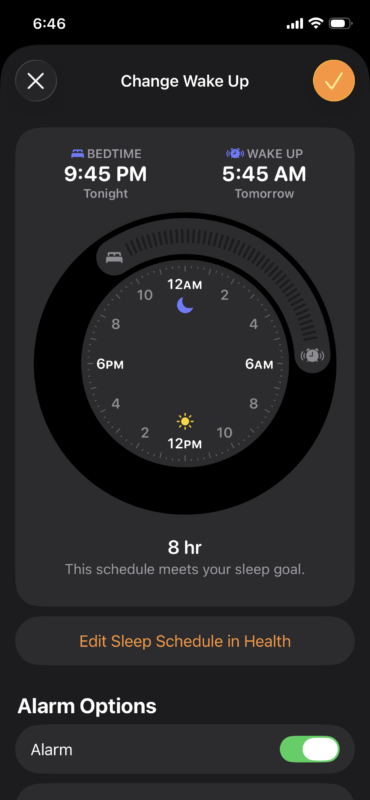
What if you start to build some consistency after a few days, sleep in, and miss your study session?
Remember that setbacks are part of the process. Don’t stay idle. Instead, continue the next day with your studying.
Now it’s time to put your good enough goal into action by using a calendar. The primary reason for using your calendar is how easy it makes it to get started with studying. One of the secondary reasons is the ability to adapt when something comes up.
Here are the steps to set up your calendar to help you succeed with studying for your PPL written.
1. Choose a calendar app. Start with a calendar that is available on your computer. That could be Apple, Google, Outlook, etc. Don’t overthink it. Choose one and move forward.
2. Add the calendar to all of your devices. Instead of trying to remember to study, have your devices remind you to study.
3. Create a calendar event with the details. Include links to your Google Doc and your online ground school.
4. Adjust the alerts/notifications. Set to at time of event.
5. Set your calendar event to repeat. Start with Monday through Friday.
How to create calendar events to make it easier to study for your PPL written
“As any coach or athlete will tell you, consistency of effort over the long run is everything…even more than the effort a gritty person puts in on a single day, what matters is that they wake up the next day, and the next, ready to get on that treadmill and keep going,” wrote Angela Duckworth in Grit.
Your calendar is the best tool that you have to get started with studying for your PPL written test. Here are three ways to make the most of your calendar so you can prepare for your test:
1. Be specific
2. Be realistic
3. Be flexible
Whether you are just getting started with studying for your PPL written or you fell off track and are ready to continue forward, remember that you prioritize what is important to you. If you are ever in doubt, pause and think back to something that you already learned to do, like how to drive a car. Then remind yourself that your FAA knowledge test is part of the process in your aviation journey.
What is your biggest challenge when it comes to preparing for your PPL written test?
